
Advisors

Everyone knows the conversation needs to happen. Parents want their children to be prepared. The rising generation wants to understand their family’s story, values, and expectations. Advisors know that a stronger connection with the next generation matters.
And yet, everyone’s waiting for someone else to go first.
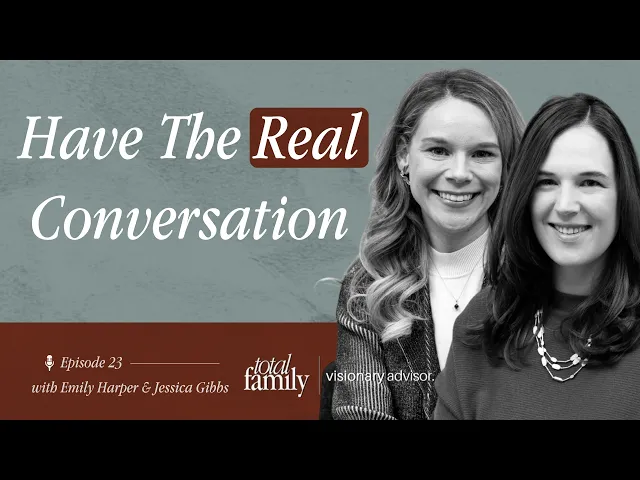
That’s the tension at the center of this episode of Visionary Advisor. Alex Kirby sits down with Emily Harper and Jessica Gibbs of Monument Wealth to talk about inheritance, values, sibling dynamics, and the family conversations that often get delayed because they feel too big, too emotional, or too awkward to begin.
Their message is simple: don’t wait for the perfect moment. It probably won’t come. Start with curiosity, start small, and let the conversation grow from there.
The Rising Generation Isn’t Just Asking About Money
Legacy planning is often framed from the perspective of the wealth creator. You’ve built something. You want to pass it on successfully. You want your children to enjoy it without being spoiled. You want values to transfer alongside dollars.
But what does this look like from the other side?
Jessica asks listeners to imagine being in their twenties or thirties, seeing signs that their parents are doing well, but never hearing them talk about what they’ve built, what they intend, or what they hope comes next. It’s hard to bring that up without worrying it’ll sound like you’re asking, “What am I going to inherit?”
Most rising-generation family members aren’t looking for statements or dollar amounts. They’re often looking for context. They want to understand where the family came from, what sacrifices were made, how decisions were made, and what their parents hope the wealth will make possible.
That’s why anyone can lead a family wealth conversation. A son, daughter, grandchild, sibling, or advisor can open the door with a real question and genuine curiosity, rather than waiting for the wealth creator to schedule a formal legacy meeting.

The Wealth Transfer Is Really a Values Transfer
Emily points to the estimated 124 trillion dollars expected to change hands by 2048. It’s an enormous number, but it can make the story sound like it’s only about money. It isn’t.
The people Emily and Jessica work with are often already aware that there may be an inheritance in their future. What they want isn’t necessarily a forecast. They want to know their family’s story. They want a more connected family. And they want to understand how the values behind the wealth can carry forward.
That’s an important distinction for advisors. If the only framework for a wealth transfer is “how much” and “when,” then the family is missing the questions that make the transition meaningful:
What did it take to build this wealth?
What did the family learn along the way?
What do we want this wealth to enable for future generations?
How can each person use their resources in a way that reflects the family’s values while building a life of their own?
Families don’t need to answer every question in one conversation. But they do need a place to begin.
Estate Planning Handles the Plumbing, Not the Meaning
A well-built estate plan matters. Trusts, beneficiary designations, guardrails, and succession decisions are all important pieces of the work. They’re the plumbing that makes the plan function.
But plumbing isn’t the same thing as communication.
As Emily puts it, it’s relatively straightforward to put legal structures in place around how wealth will be managed or distributed. The harder part is explaining what’s important to you, why it’s important, and what you hope your children will embody.
That’s where many families get stuck. They’ve signed the documents, so they assume they’ve handled legacy. But the documents can’t explain the intention behind a decision. They can’t share the family’s hopes. And they can’t prepare someone emotionally to step into a future role.
Advisors can help close that gap. They don’t have to become therapists, and they don’t have to facilitate a perfect, high-stakes family meeting on day one. They can start by asking a client to name what they most want their children to understand about the wealth they’re building.

A Trust Can’t Tell the Whole Story
A 50-page trust might answer important legal questions, but it rarely gets to the heart of a parent’s intentions.
Jessica makes the point clearly: the rising generation wants to understand expectations and intentions, and those are the things that are hard to glean from a legal document. A trust might say what happens. It probably won’t say what a parent hopes the money will mean in a child’s life.
That’s a major difference.
The questions that matter to heirs are often more human than technical:
What do you hope I’ll use this wealth for?
What do you value about the way I live my life?
What parts of our family story do you want me to carry forward?
How can I honor your legacy without feeling like I have to replicate your life exactly?
Those aren’t questions a legal document can answer. They require conversation, and they’re often best explored over time rather than delivered as a one-time set of instructions.

The Fear of Spoiling Kids Is Real, but It Isn’t a Reason to Stay Silent
One of the biggest reasons parents hesitate to talk about wealth is the fear of spoiling their children. They don’t want to weaken work ethic, create entitlement, or make a young adult feel like they don’t need to build a life of their own.
That concern is real, especially for self-made families who’ve experienced dramatic change across just a few generations. But Alex points out that “spoiled” is relative. A family doesn’t have to be ultra-wealthy to worry that its children have had more access, comfort, or opportunity than the generation before them.
Silence doesn’t automatically protect against entitlement. Children are observant. They notice the house, the travel, the business, and the lifestyle. If the family never talks about the responsibility and intention behind those resources, they may fill in the blanks themselves.
The better approach isn’t to reveal everything overnight. It’s to build understanding gradually. Parents can talk about how they lived, worked, gave, saved, made decisions, and handled setbacks. Those lived examples often do more to shape a child’s relationship with wealth than a number ever could.

Don’t Wait for the Perfect Moment
The biggest mistake is doing nothing.
Emily says families often delay these conversations because they’re emotional and important. They wait for a perfect moment, a perfectly rehearsed opening, or certainty about exactly where the conversation will go. But those moments may never show up.
That’s why the best opening is usually smaller and more natural than people expect. On a beach trip, at dinner, or after a family story comes up, someone might say: “I remember you’ve mentioned running the business in those early years. What was that time really like for you?”
That’s not a demand for financial details. It’s an invitation to share. And storytelling is often the easiest path into more meaningful conversations about values, intentions, responsibilities, and legacy.
For advisors, this is where your role can be especially valuable. You can encourage clients to think through the consequences of saying nothing. You can help them start with a values exercise. You can suggest a meeting that explains a future role without disclosing dollar amounts. You can invite siblings into a conversation while everyone’s healthy, rather than waiting until a crisis forces difficult decisions.
You don’t need the perfect process. You just need to help the family take the first step.
Start With What’s Already Working
A family communication journey doesn’t have to begin with the area where the family feels weakest. In fact, it probably shouldn’t.
Some families are naturally good storytellers. Others connect through shared experiences, philanthropy, humor, sports, food, or working together. Start there. The easiest, most natural strength in a family can become the bridge to the harder conversations that follow.
For advisors, values can be an especially useful entry point. Asking clients to choose the values that matter most to them often brings a sharper, more personal understanding of what they want their wealth to support. It gives families a common language before they’re ready to talk about decisions, distributions, or estate documents.
That’s how continuity is built. Not through one perfect conversation, but through a series of smaller ones that help a family understand its past, align around its present, and prepare for what comes next.
Listen to the Full Episode
The full conversation with Emily Harper and Jessica Gibbs is available now on Apple Podcasts, Spotify, and YouTube.
If this episode gave you a new way to think about starting family wealth conversations, subscribe to Visionary Advisor and share it with another advisor who wants to help families do legacy better.
[SUBSCRIBE ON APPLE PODCASTS] [SUBSCRIBE ON SPOTIFY] [WATCH ON YOUTUBE]
.