Advisors

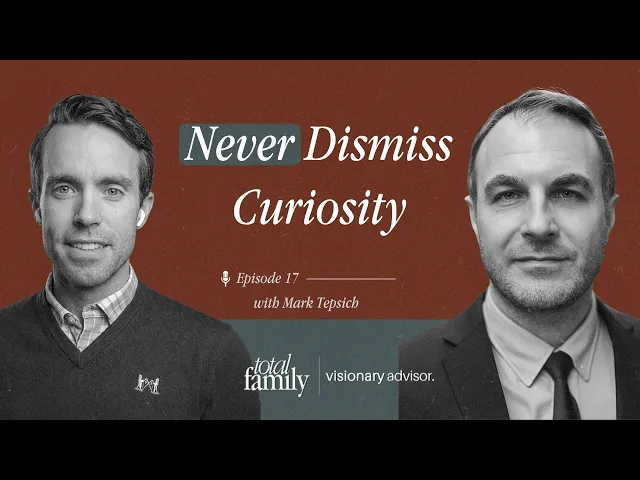
This article is based on a recent episode of Visionary Advisor, where Alex Kirby, founder of Total Family, speaks with Mark Tepsich, co-author of the UBS Family Enterprise Governance Report - a landmark study drawing on data from families with an average net worth of $2.4 billion.
-> Watch the full playlist of episode clips
For wealth advisors working with high-net-worth and ultra-high-net-worth families, governance is often treated as a structural exercise. Committees, constitutions, ownership definitions. But what the UBS data reveals, and what Mark Tepsich has seen up close in family offices around the world is that governance is first and foremost a culture problem.
The Number That Should Surprise Every Advisor
$2.4 billion. That is the average net worth of the families who participated in the UBS Family Enterprise Governance Report.
And yet, fewer than 50 percent of those families rated themselves as effective at joint decision-making.
That number is striking. These are not families without resources. They have access to the best legal, financial, and advisory talent in the world. What they often lack is not sophistication - it is alignment.
Mark Tepsich puts it plainly: the lessons from a $2.4 billion family apply equally to a family with $15 million or $2.4 million. Because the core challenge is the same across every level of wealth.
How are you preparing the next generation to navigate the enterprise together?
That is a people question. And it is one that most advisors have not been trained to answer.
The Real Value of a Family Constitution Is Not the Document
Family constitutions carry a weight that the word itself creates. In the United States, the word “constitution” suggests something fixed, formal, and permanent, a seminal document that governs everything.
That framing, Mark argues, is precisely what gets families stuck.
The real value of a family constitution is not the document. It is the process of creating it.
When a family sits down to articulate who they are, where they want to go, and how they are going to make decisions together, that conversation is governance. The paper is just a record of it.
Mark recommends keeping it simple. Two to three pages. Clear values, clear decision-making principles, clear support commitments. Nothing that requires a filing cabinet and a lawyer to interpret.
And once it exists, it should evolve. Families that freeze their constitution, that treat it as permanent the moment it is signed, are building a structure that will eventually stop reflecting who they actually are. Divorce, new family members, business changes, and generational shifts: all of these alter a family’s reality. The constitution should adapt alongside them.
Alex draws a useful parallel: “If you’ve ever assembled IKEA furniture while you’re angry, you build your anger into the bookshelf.” Governance documents created under pressure or duress, they carry that energy with them. The process works best when families approach it with energy and intention, not urgency.
The standard to aim for is not a perfect document. It is a living one.
How In-Laws Quietly Reshape a Family’s DNA
One of the more nuanced dynamics in family governance is what happens when families merge, not through business combination, but through marriage.
When a son or daughter marries into another family, two distinct sets of norms, values, and operating assumptions come together. The children of that marriage are a product of both parents.
Mark sees this as a fact of family life rather than a threat to it. In most ultra-high-net-worth situations, structural protections - prenuptial agreements, trust arrangements, and defined ownership structures - keep enterprise assets clearly delineated. But the cultural influence of a new family member is harder to define and easier to underestimate.
He points to the most famous example of this dynamic: the British royal family, where a member who married in pushed the institution to engage more directly and authentically with the public. That was not an erosion of the family’s values. It was an evolution of them.
For advisors, the implication is straightforward. Governance work that only accounts for the current generation is incomplete. The way a family prepares for new members - and integrates their perspectives - is as much a governance question as any ownership structure.
The families who handle this situation well do not treat incoming members as a risk to be managed. They treat them as contributors to a culture that is, by design, always becoming something new.
Why Most Advisors Are Afraid of Family Meetings
Only 34 percent of ultra-high-net-worth families in the UBS study reported holding regular non-financial family meetings.
That number is low. But it reflects something that advisors already know intuitively, even if they rarely name it.

Most advisors are uncomfortable facilitating conversations that fall outside the boundaries of investment management. That discomfort is not a character flaw. It mirrors the discomfort of any specialist asked to operate outside their specialty. A physician does not readily step beyond their area of practice. Neither does a financial advisor.
The result is a gap. Families who would benefit from structured, intentional non-financial conversation,about values, about next-generation preparation, about how the family operates together, often going without it. Not because no one cares, but because no one feels equipped to lead it.
Mark makes the case that advisors are more equipped than they believe.
The core skill of wealth management is not portfolio construction. It is relationship management. Advisors who have built trust with multi-generational families over decades already possess the raw material for facilitating these conversations. What they often lack is not the ability; it is the agenda, the structure, and the permission to try.
For advisors reading this: the families who need this kind of support are already in your book. The bigger risk is not doing it imperfectly. The bigger risk is not doing it at all.
Family Culture Is Not a Fluffy Word
“Culture” is a word that generates resistance. It sounds abstract. Difficult to measure. Easy to dismiss.
Mark does not dismiss it.
He defines family culture with precision: shared norms and shared values. In practice, that means how a family communicates, how it makes decisions, how it holds its members accountable, and how it prepares the rising generation to navigate the enterprise.
How do we do things around here?
That is culture. It is not amorphous. It is observable, teachable, and, critically, it is not separate from governance. Culture is governance.
Mark uses the UBS Governance Report itself as a Trojan horse for culture conversations. When families resist talking about culture directly because it feels vague or uncomfortable, the structured questions around governance provide a more accessible entry point. Once advisors begin asking about communication, decision-making, and next-generation preparation, the culture conversation has already started.
Peter Drucker’s principle applies here as much as it does in any organization: “Culture eats strategy for breakfast.” A governance structure is only as strong as the culture that supports it. Committees, councils, and constitutions are meaningless if the family members sitting in those meetings do not actually want to be there or do not know how to engage with one another.
The work of building family culture is not a soft supplement to governance planning. It is the foundation.
The Number One Mistake Advisors Make With the Next Generation
The rising generation is often the most underprepared and the most excluded participant in the governance conversation.
Wealth creators spend years building something brick by brick. They understand every layer of it. The next generation frequently stands at the base of that structure with no clear path up.
The most common response from wealth creators, understandably, is to protect. To keep the next generation away from the numbers until they are ready. To lock assets in trust until age 35. To wait until there is a formal role before granting access.
That instinct comes from care. But Mark argues it produces the opposite of what families intend.
When the rising generation is kept in the dark, two messages are communicated, even if neither is spoken. The first: we do not trust you. The second: you have nothing to contribute.
Those messages, received over years, are not neutral. They shape how the next generation relates to the family’s wealth, to each other, and to the advisors who manage it.
Mark’s recommendation is direct: give the rising generation a seat at the table before they formally need one. Not a full vote, but a voice and a presence. Invite them into advisor meetings as observers. Give them a small account to manage. Let them make low-stakes decisions so that when higher-stakes decisions arrive, they have practiced the muscle.
Alex frames it as the difference between everyone gets a vote and everyone gets a voice. The voice comes first. And it costs nothing to offer it.
For advisors specifically: when a next-generation family member calls about crypto, or a startup, or impact investing, that call is not an inconvenience. It is the opening.
If an advisor dismisses that call, that family member will stop calling. Not immediately. But eventually. And by the time the wealth transfers, that advisor is a stranger to the person who now controls it.
The advisors who retain multi-generational relationships are the ones who treat the rising generation’s curiosity as worth their time.
What This Means for Advisors Right Now
The UBS Family Enterprise Governance Report is not only a study of ultra-high-net-worth families. It is a map of where the gaps are and where the opportunities sit.
Fewer than half of the wealthiest families in the world feel effective at joint decision-making. Only a third of the respondents hold regular non-financial meetings. Family newsletters, retreats, and structured next-generation engagement remain the exception rather than the rule.
These are not gaps that require a specialist. They require an advisor who is willing to expand slightly beyond the financial conversation and who has a framework for doing it.
That is the role the Visionary Advisor is designed to support.
Don’t be afraid. As Mark puts it in his closing words to advisors, culture is how wealth is preserved.
Not structure. Culture.
A Final Thought
Most families will transfer wealth.
Far fewer will successfully transfer the values, communication habits, and shared identity that give that wealth meaning across generations.
The gap between those two outcomes is not filled by a better estate plan. It is filled with the conversations that happen, or don’t, before the transfer takes place.
For advisors, the families who need these conversations are already in front of you.
The question is whether you are willing to start them.
-> Learn more about Total Family and its family legacy software