Advisors
Eighty percent of men die married. Eighty percent of women die single. When you hold those two statistics together, the shape of the great wealth transfer becomes impossible to ignore.
Fifty-four trillion dollars in interspousal wealth will move between generations by 2048, and the vast majority of it will pass to women first, before it ever reaches the next generation. Yet 70% of widows leave their financial advisor within the first year of losing their spouse. Most advisory practices were built around a single point of contact, usually the husband. When he dies, the relationship goes with him.
That is not a client retention problem. It is a practice design problem.
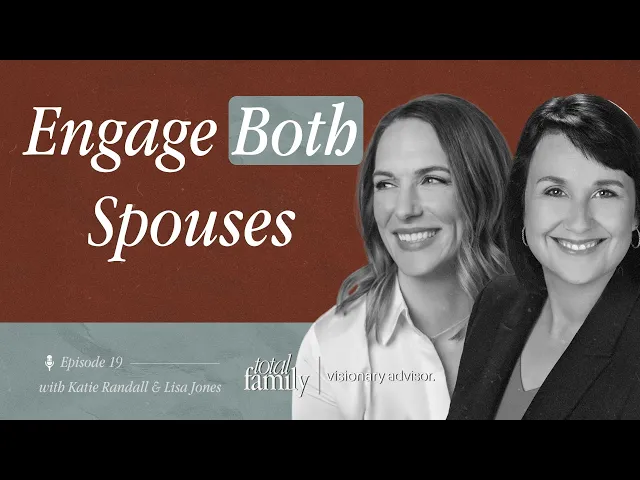
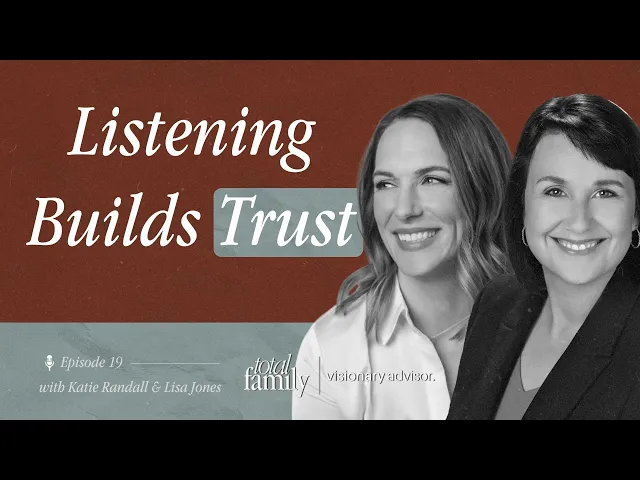
In Episode 019 of the Visionary Advisor podcast, Alex Kirby sits down with Lisa Jones and Katie Randall, two advisors at Prime Capital who have spent years building practices that center the clients most of the industry loses. What follows is one of the most practical and human conversations the show has produced.
This Is Not a Future Problem
One of the most important things Katie and Lisa say early in the conversation is that advisors are still treating this as a coming trend rather than a present reality.
"We've all been hearing this: oh, this will start happening in 2030 or 2032," Katie says. "It's happening now. I'm already getting young women who are inheriting from their grandparents because of this. It's an opportunity right now."
The life expectancy gap between men and women now sits at nearly six years, the largest it has been since 1996. Advisors who are not actively engaging both spouses today are already behind. The wealth transfer is not arriving on a scheduled date. It is in progress across every client book in the country.
How Men and Women Communicate Differently in a Meeting
One of the most memorable exchanges in the episode comes from a story Lisa tells about a male colleague. She had gone to him to talk through a client problem, approaching the conversation the way she would with a female colleague, circling the issue, building context, working through it from multiple angles. He stopped her and said: "Lisa, you're flying the plane without the landing gear down. Can you please land the plane?"
His intent was to help. But the dynamic in that moment captures exactly what happens in advisory meetings every day.
"If we're not making space for the female to go through that process," Lisa explains, "then we're missing it. Many male advisors don't pick up on the cues that the woman needs more space to talk through the problem, to talk around the problem, until we get to what she really needs and wants."
Katie connects this directly to retention. "If we leave space for those stories, that's when we can connect the most with what her planning priorities are. In a way that's not going to have her leave you if she loses her spouse and finds someone else who's a better listener."
What Women Actually Look for in an Advisor
The data backs up what Lisa and Katie see in practice. Fifty-three percent of women say relationships are the primary factor in choosing an advisor, compared to 42% of men. But what does that actually mean in a first meeting?
Lisa's answer is direct: "They don't want to know what you know. They want to know that you care."
She uses an analogy that stayed with Alex long after the conversation: "We're all artists. We all have the same canvas, the same paints in our paint box. The question is, what does the picture look like? I'm going to paint a picture for you and you tell me if that resonates. If it doesn't, it's okay. I want you to find somebody who you connect with."
That posture, one of genuine discovery rather than performance, is what builds the kind of relationship that survives the hardest transitions in a client's life.
Navigating Divorce: The Silver Split and the Team Approach
While death gets most of the attention when advisors think about wealth transition, divorce is an equally significant and growing factor. The divorce rate among people over 55 has tripled in the past 15 years. Katie has built a substantial part of her practice around helping clients through what she calls the silver divorce.
The key issue is conflict of interest. When a couple is separating assets, one advisor cannot genuinely serve both parties. Lisa's solution is a team structure built in advance.
"I remind women: by choice or by chance, you may be alone in the future," Lisa says. "I partner with a male advisor in my practice. Whenever there is a divorce, I continue to work with the female, and I introduce my male partner to work with the husband. That's worked really well."
Katie adds the practical boundary: "There's an inherent conflict in being the sole advisor for a divorcing couple. Someone's taking a boat and someone's taking a Roth IRA. I know who the better end of that deal is." A team approach removes that conflict and keeps the client relationships intact on both sides.
The One-Year Rule for Grieving Clients
When a spouse passes, the pressure on the surviving partner to make financial decisions is immediate and intense. Sell the house. Invest the life insurance settlement. Get rid of the car. Lisa has a firm rule for every client in that position: no major decisions within the first year.
"There are too many emotions where our judgment is clouded," she says. "Unless there's something that absolutely has to be done immediately, I want to give them space to make a decision and sit with them in that time."
The contrast she draws is pointed. Another advisor, she notes, might see a large life insurance settlement and move straight to products. "This isn't the time for products. This is really the time for sitting with the grief."
That posture, of a trusted guide who slows things down rather than speeds them up, is precisely what most widows are looking for in the critical months after a loss. It is also exactly what many advisors fail to provide.
Stop Pushing the Tissue Box
One of the most quietly powerful moments in the episode comes from Katie's advice about how advisors handle emotion in the room. It sounds small. It is not.
"You can't be afraid of tears. Welcome those. Always have tissues in your office. But do not push the tissue box over to them when they start crying. They can go get it themselves."
The reason matters. When you slide the tissues across the desk, you are signaling: the crying portion of this segment is now over. I am uncomfortable. Please dry your eyes. You may think you are helping. You are actually closing down the very emotional space that makes a client feel safe enough to stay.
Katie recalls a client, going through a divorce, who was physically shaking in her office during their first meeting. "I just let that be there. It shows that you can handle that. That is the seed of trust and emotional safety. So that a year down the road, or eighteen months down the road, when she's ready to make a big decision, she trusts you."
Lisa adds the metric that has stayed with every advisor in their office since she first said it: "Someone should cry once a week in your office. If that's not happening, you may not be going deep enough."
The Practice Design Shift That Changes Everything
The thread running through everything Lisa and Katie discuss is that the gap between advisors who retain clients through transition and those who lose them is not a skills gap. It is a design gap.
Most practices are built around the engaged spouse, optimized for efficiency, structured around financial data, and uncomfortable with emotion. That design works well right up until the moment it matters most. At the point of death, divorce, or major transition, the clients who did not feel seen throughout the relationship have every reason to start over with someone who will make them feel differently.
Lisa and Katie have built their practices in the other direction. Both spouses present at every major meeting, no exceptions. Handwritten notes to the less engaged partner. Values conversations before portfolio conversations. Space for emotion, for grief, for the long and winding story that eventually leads to what the client actually needs.
As Alex puts it at the end of the conversation: "GPT doesn't know how your parents met. There are still things that are not on the internet, not publicly available, that are specific to your story and your family's story. The advisors who understand that are the ones who will be indispensable."
Listen to the Full Episode
The full conversation with Lisa Jones and Katie Randall is available now on Apple Podcasts, Spotify, and YouTube.
If this episode changed how you think about the clients your practice is designed to serve, subscribe to the Visionary Advisor podcast and leave a review. It helps other forward-thinking advisors find the show.